
Sustainability & Stewardship: Green Practices at our Algonquin Park Home
Northern Edge Algonquin was created as a place to slow down, reconnect, and spend meaningful time in nature — while caring for the land and community that make that experience possible.
Sustainability and stewardship have always been woven into how we operate. From the way our buildings are powered, to how our food is sourced, to the limits we place on growth and guest capacity, our focus is on practical choices, long-term thinking, and responsible travel experiences which honour our connection with the earth, local communities, local food producers.
Below, learn how sustainability and stewardship are reflected across our energy systems, land care, sourcing and food, water use, waste management, the guest experience, and our community-minded mission. Where possible, we include concrete metrics, examples, and costs to show how these choices show up in practice.
Innovation highlight:
We partnered with the Canadore College Innovation Centre (ICAMP) and local engineering students to design and build a walk-in refrigerator that requires no electrical power or moving parts. This system uses passive cooling principles and thoughtful insulation to keep food fresh without drawing from the on-site solar array — a meaningful reduction in energy demand and a strong example of place-based innovation. This project not only demonstrates leadership in sustainable food storage, but also reflects Northern Edge’s commitment to collaboration with regional educational and technical partners to find resilient, low-impact solutions.
Energy & Power
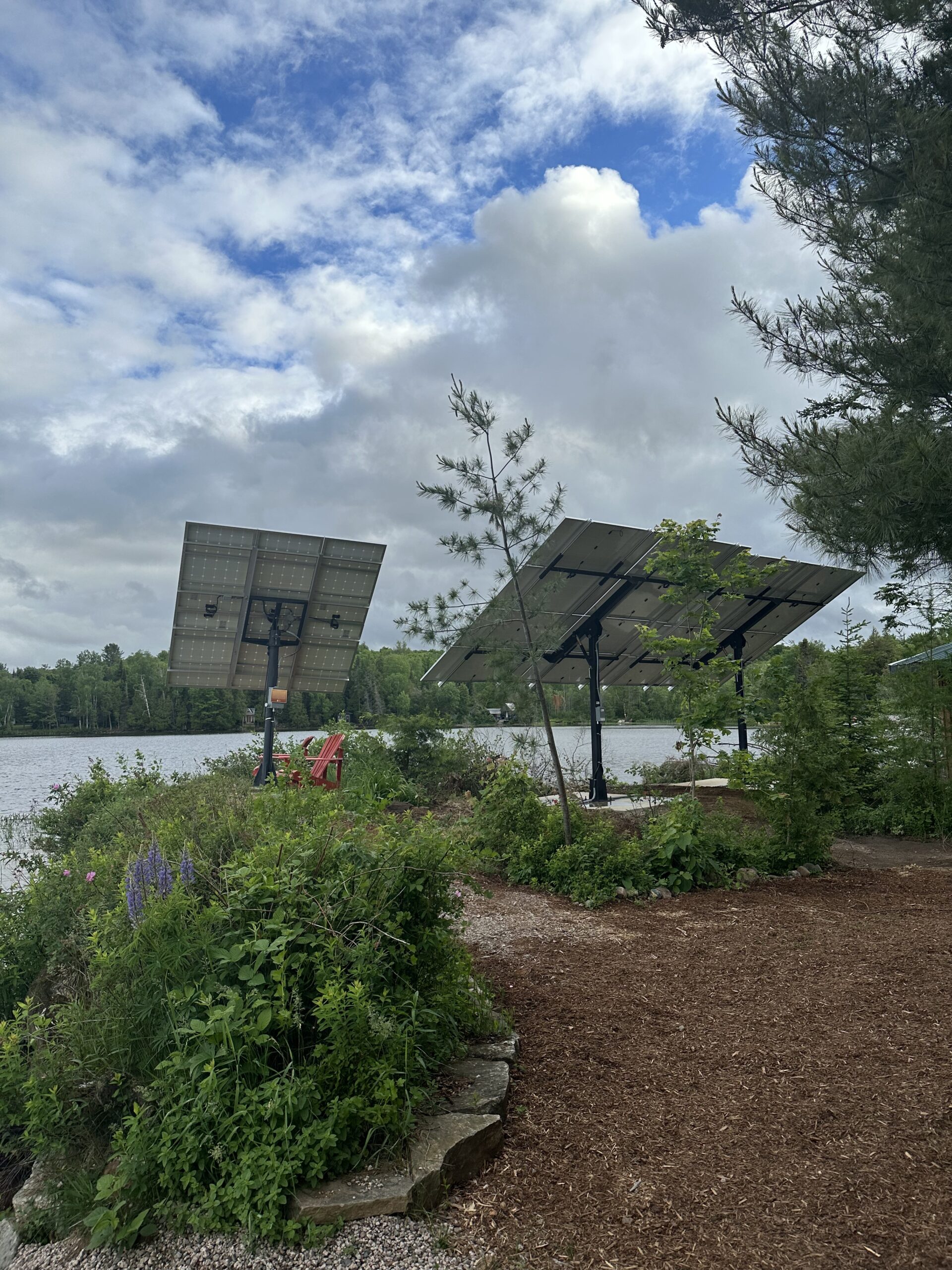
Northern Edge operates entirely off-grid using a solar-powered energy system. Rather than trying to generate more electricity to meet every possible need, our buildings, programs, and guest experience are designed to work comfortably within what nature provides. In the warmer months, our batteries often reach full charge on sunny days, and we have a true excess of power. In the darker months, we adapt by reducing demand and running a generator only when necessary to keep the system reliable and healthy.
Energy system & seasonal metrics:
- 0% grid electricity use: Northern Edge operates entirely off-grid, eliminating reliance on provincial electricity and associated transmission impacts.
- Direct emissions reduction: Solar energy supplies the majority of on-site electricity needs, significantly reducing fossil-fuel use compared to grid-connected or generator-dependent lodges.
- 32 solar panels with up to 17.5 kW installed capacity
- Lithium battery storage: approximately 1600 amp-hours at 48 volts (≈ 65 kWh usable storage)
- Peak solar production: approximately April through September, when long daylight hours and higher sun angles regularly allow batteries to reach 100% charge by late morning or early afternoon
- Lowest solar production: approximately November through February, when shorter days and lower sun angles significantly reduce generation and overall guest capacity is reduced accordingly
- Based on operational logs, typical daily energy use falls within a 15-28 kWh range, depending on season, weather, and number of guests on site
- Minimal fuel dependence: Backup generator use is limited to extended periods of low solar production, averaging approximately 250 litres of diesel per year, substantially lower than typical off-grid accommodations of comparable size.
Energy use is reduced through both design and behaviour:
- 100% LED lighting across the property, supported by motion sensors and clear expectations for staff and guests to turn off lights when leaving rooms
- No air conditioning or electrical heating provided
- Guests informed not to bring or use high-draw electrical appliances (like hair dryers)
- All facility appliances and electronics are selected based on energy efficiency and total system impact, rather than convenience alone.
Regenerative Stewardship & Facility Development
Northern Edge is located on 10 acres of forested, lakeside property near Algonquin Park. Approximately 7 acres (about 70%) remain undeveloped and forested, with the remaining 3 acres (about 30%) used for buildings, paths, and clearings.
Our approach to land stewardship prioritizes restraint, restoration, and long-term care. Practices include:
- No clear-cutting and a cap on new development (future construction will replace existing structures or use already cleared areas)
- Trails and forests are maintained carefully to balance access with protection. Trees are removed only when necessary for safety and forest stewardship, and are reused on site as firewood or mulch
- Our former driveway and service road were intentionally re-wilded, leaving a narrower access trail for vehicles
- Pesticides and chemical herbicides are actively avoided.
- Native trees are planted every spring in targeted areas where additional wind shelter or habitat support is needed. Saplings are gathered from overabundant or disturbed locations such as road allowances that would otherwise be cleared for maintenance.
- Invasive species are identified and manually removed through regular property surveys (Recent example: removal of invasive mustard and clover introduced through vehicle traffic)
- We do not feed wildlife or encourage animals to depend on human food. Bird feeders are maintained in designated areas to support local birdlife responsibly.
- Shoreline habitat protection: Root systems, reeds, and native plant life are left intact to prevent erosion and preserve aquatic habitat. We do not salt or dredge the swimming waters or shoreline, and we avoid the use of motorized watercraft to reduce fuel pollution and disturbance.
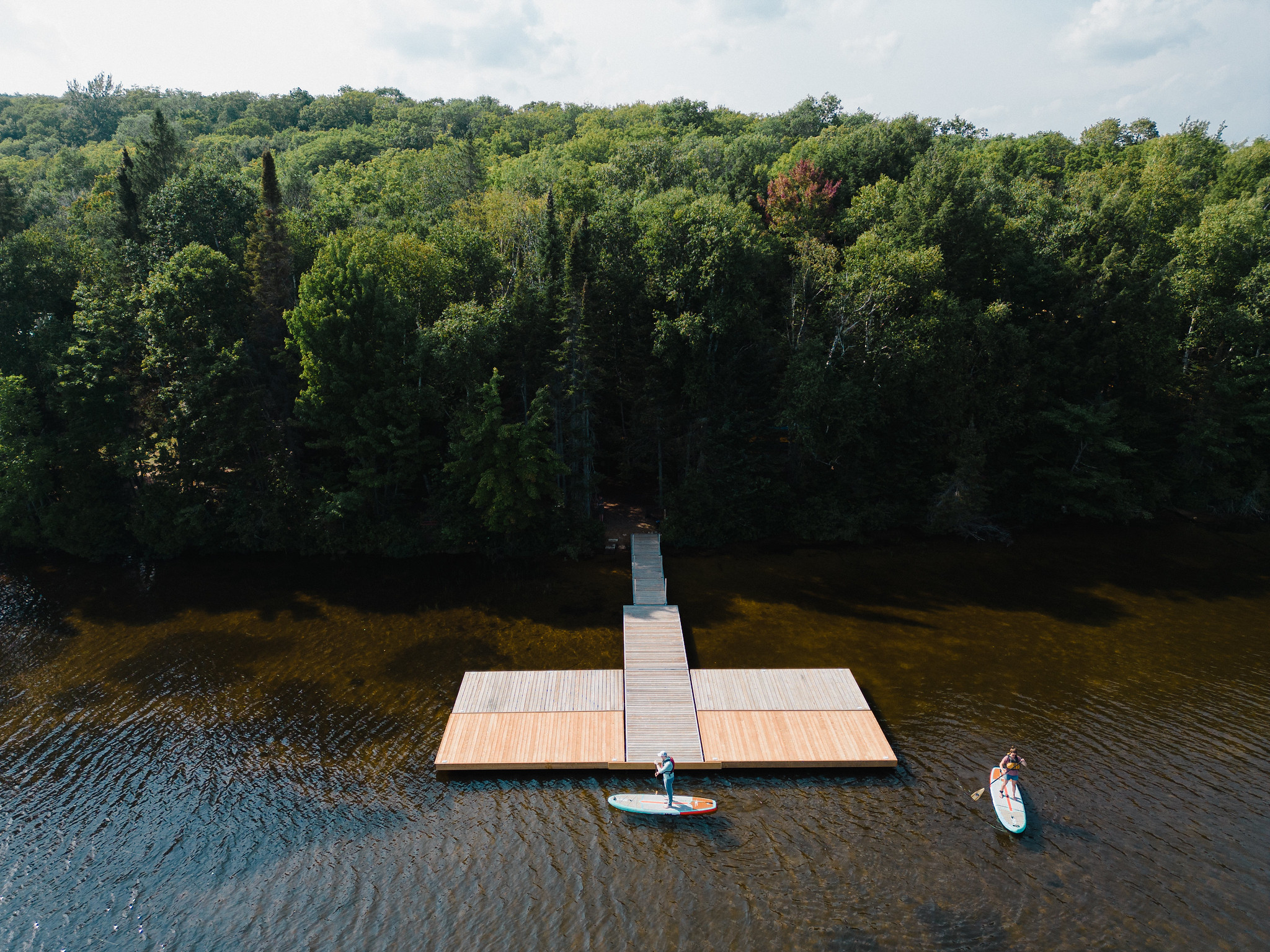
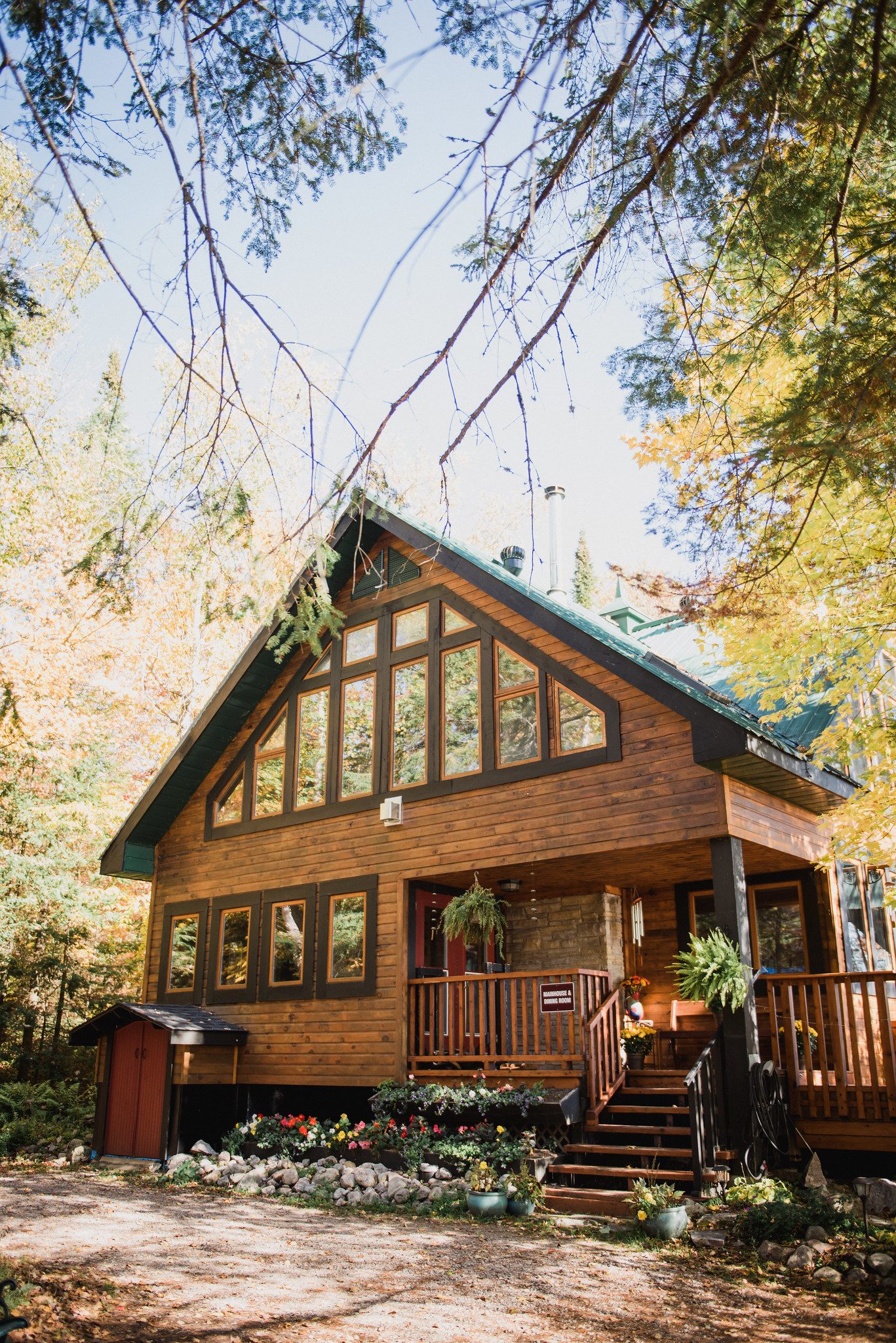
Our entire facility was designed to exist in harmony with the natural environment that surrounds us, with minimal impact on the land and its resources. From Points North, designed as eco-friendly architecture complete with bamboo floors, skylights and a living green roof, to the Highlander House—crafted from the repurposed timbers of a century‑old log cabin that once stood in Loring—to our zero‑powered walk‑in refrigerator designed in partnership with an innovation lab, each structure reflects our commitment to thoughtful, sustainable design.
Water Systems
Water stewardship is essential in an off-grid environment.
- All drinking, cooking, and cleaning water comes from a deep well
- Water is UV treated and tested monthly at Near North Labs. See the latest water test results of our deep well water here.
- All taps, showers, and toilets on site are low-flow
- Lake water is pumped exclusively for irrigating gardens in summer months (never used as drinking water).
Accommodation-specific systems include:
- 6 accommodations with incinerating toilets (previously composting toilets)
- These systems were selected to improve the guest experience while balancing water conservation, safety, and regulatory requirements in an off-grid environment
- 3 accommodations that share a forest bathroom with a composting toilet
- Compost from this system is managed and buried on site in accordance with best practices
- Some cabins use gravity-fed hand-washing bladders intended for hand washing only
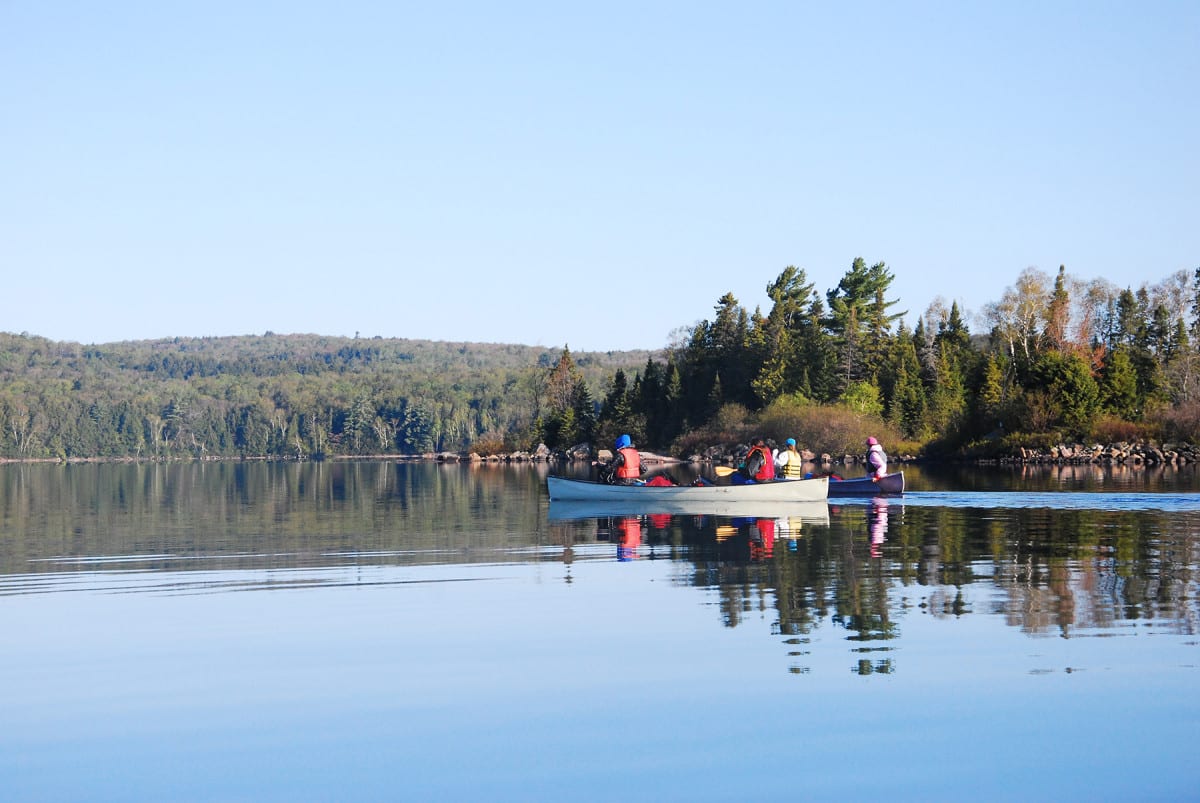
Guests are oriented verbally at the beginning of each retreat on water conservation and appropriate use of all systems.
Leave No Trace
We focus on reducing waste at the source, leaving no trace, and keeping materials in use for as long as possible.
Reduce:
- Bulk purchasing is used wherever possible to reduce packaging
- Single-use items & plastics are minimized across operations
- We prioritize digital recordkeeping and intentionally limit printing to essential program materials only (typically 3–4 pages per facilitator per retreat) reducing paper and ink use while maintaining our unplugged environment.
Re-use:
- Construction and maintenance materials are reused whenever safe and appropriate (for example, reclaimed wood repurposed into planter boxes)
- Materials past their prime are sold, donated, or given to community members rather than sent to a landfill (for example, linens donated to shelters in North Bay, yoga mats donated to schools).
Recycle:
- 100% of food waste is composted through a local partner farm (Stonemote Commons)
- This compost supports regenerative food production, some of which returns to Northern Edge.
- Some of this compost also returns to the Edge for our own gardens.
- Recycling is prioritized and separated on site, then transported approximately 30 km to the nearest municipal facility
- As non-residents, disposal costs average about $15 per load, plus an annual pass of approximately $200.
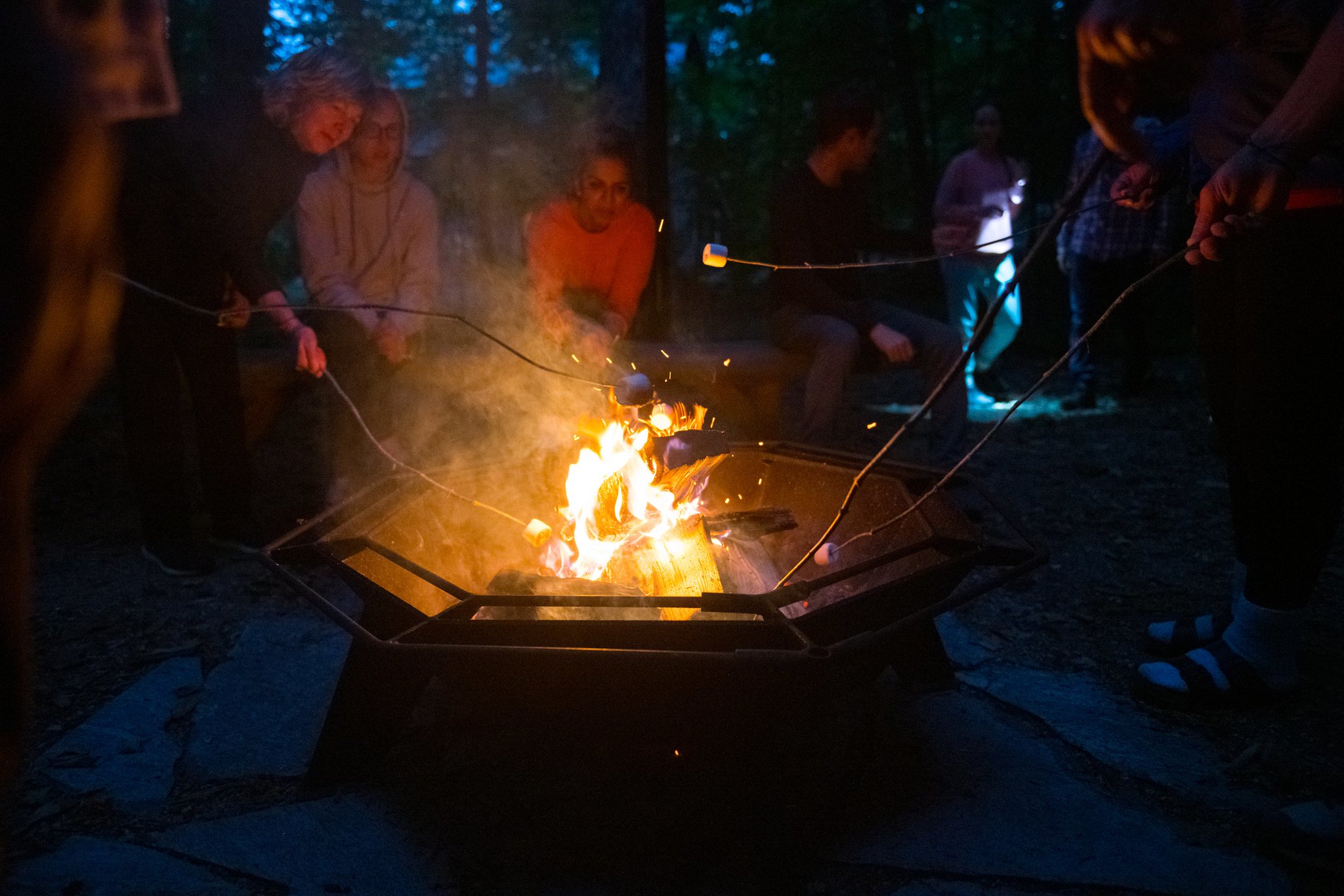
Guests are introduced to our Leave No Trace principles at the start of every program, ensuring everyone knows how to care for the land and minimize their impact during their on-and-offsite adventures.
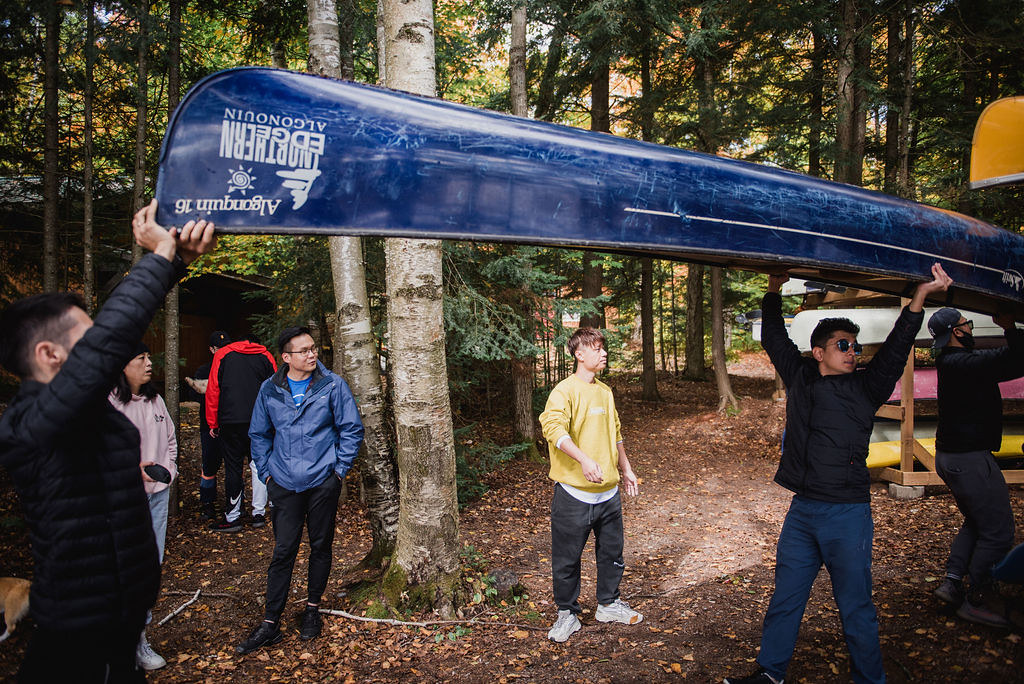
We are proud to source products & materials from local companies and fabricators including:
Swift Canoe & Kayak, Bear Chair Co.
Algonquin Tea Co, Soapstones Natural Skincare,
Seamstress Delpha Wake, Vaughan Paper Products, Muskoka Roastery Coffee Co., Peace Hill (Flower) Farm.
Sourcing & Local Partnerships
Across all food, product, and equipment sourcing — from cleaning supplies and guest amenities to furnishings, and programming materials, our policy is to intentionally prioritize:
- Local suppliers whenever possible
- Canadian-made products over imported alternatives
- Natural, low-toxicity, and chemical-free options
- Material quality & impact on the guest experience
- Wholesale & bulk purchasing, preferring refillable solutions to single-use items to reduce packaging
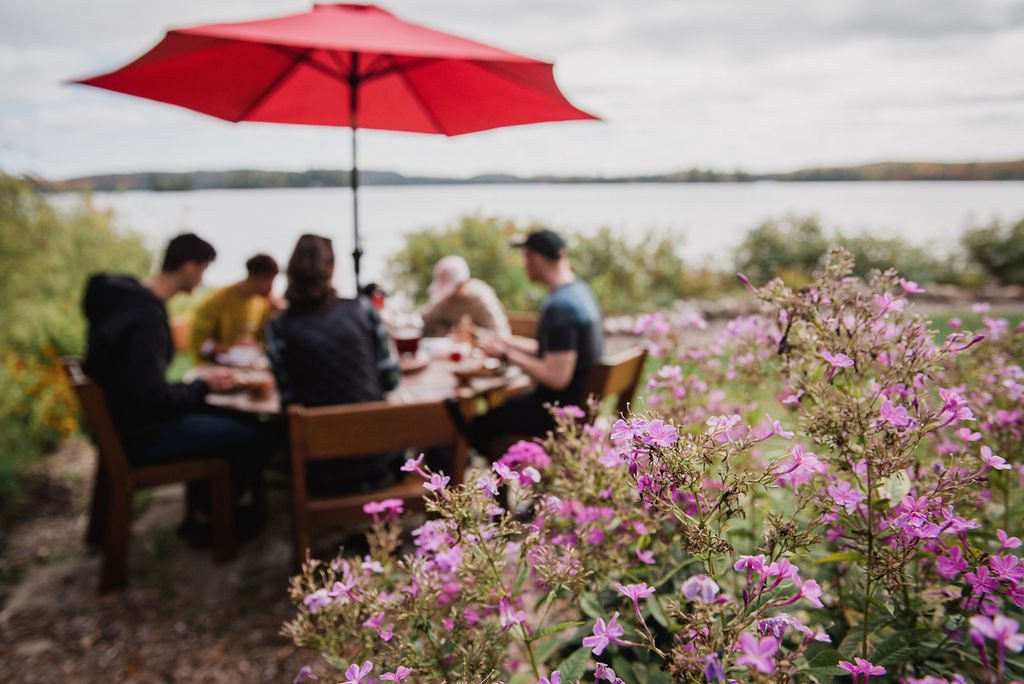
We value knowing — and sharing — the stories behind the things we use every day. When you sit by the lake, the “bear chairs” were built just down the road in South River, Ontario by Bear Chair Co. When you pull up a seat at the dining table, you’re sitting on locally crafted hardwood furniture made by The Cutter’s Edge in Huntsville. Roll out a yoga mat and you’ll find it comes from Halfmoon, a Canadian, certified B Corp committed to responsible manufacturing. Rest easy, knowing our freshly laundered linens were washed with low-toxin, Canadian-made Nellie’s products. And when you head out for a paddle, there’s a good chance you’re paddling a Swift canoe that was manufactured right here in South River.
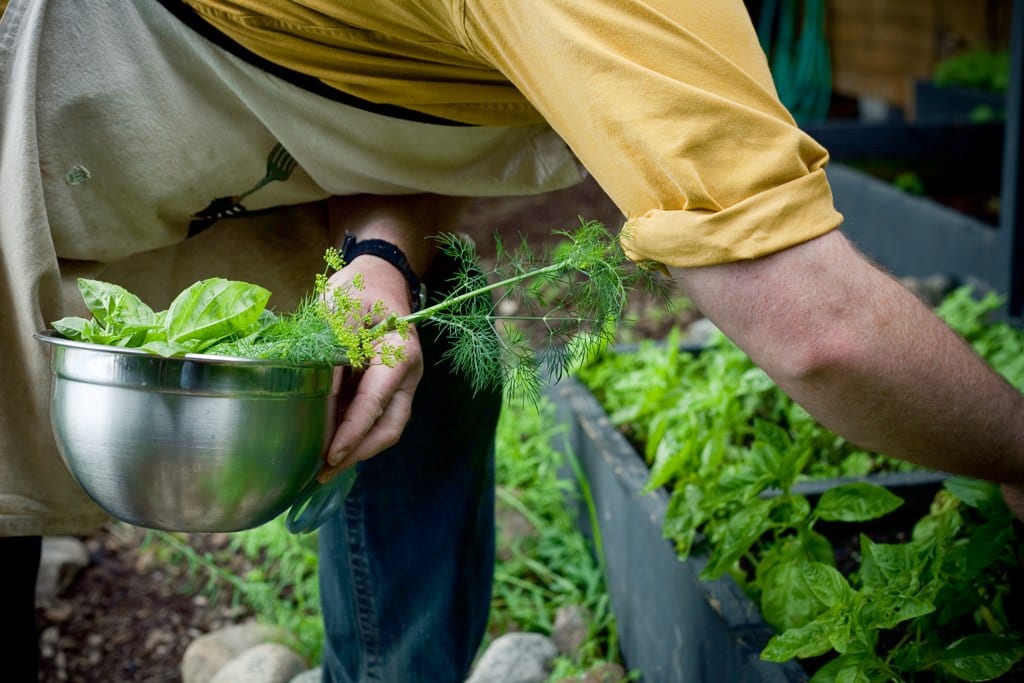
Our local food producer partners include:
Board’s Honey Farm/Northern Nectars, Brooklands Farm, Stonemote Commons, Deer Lake Lodge, DeHaan Family Farm, Jannsen Family Farms, Poschaven Farms (organic wheat), Pink Moon Garlic, Thornloe Cheese Factory, Springhill Farms, Santasha Farm, Ron & Meredith McLaren, MeMeres Bakery, MYCO-op Shiitaki, B. LePage Fishery, Atillio’s Fine Foods, Krause Farm Store, & Wild Muskoka Botanicals.
Cultivating Local Flavour
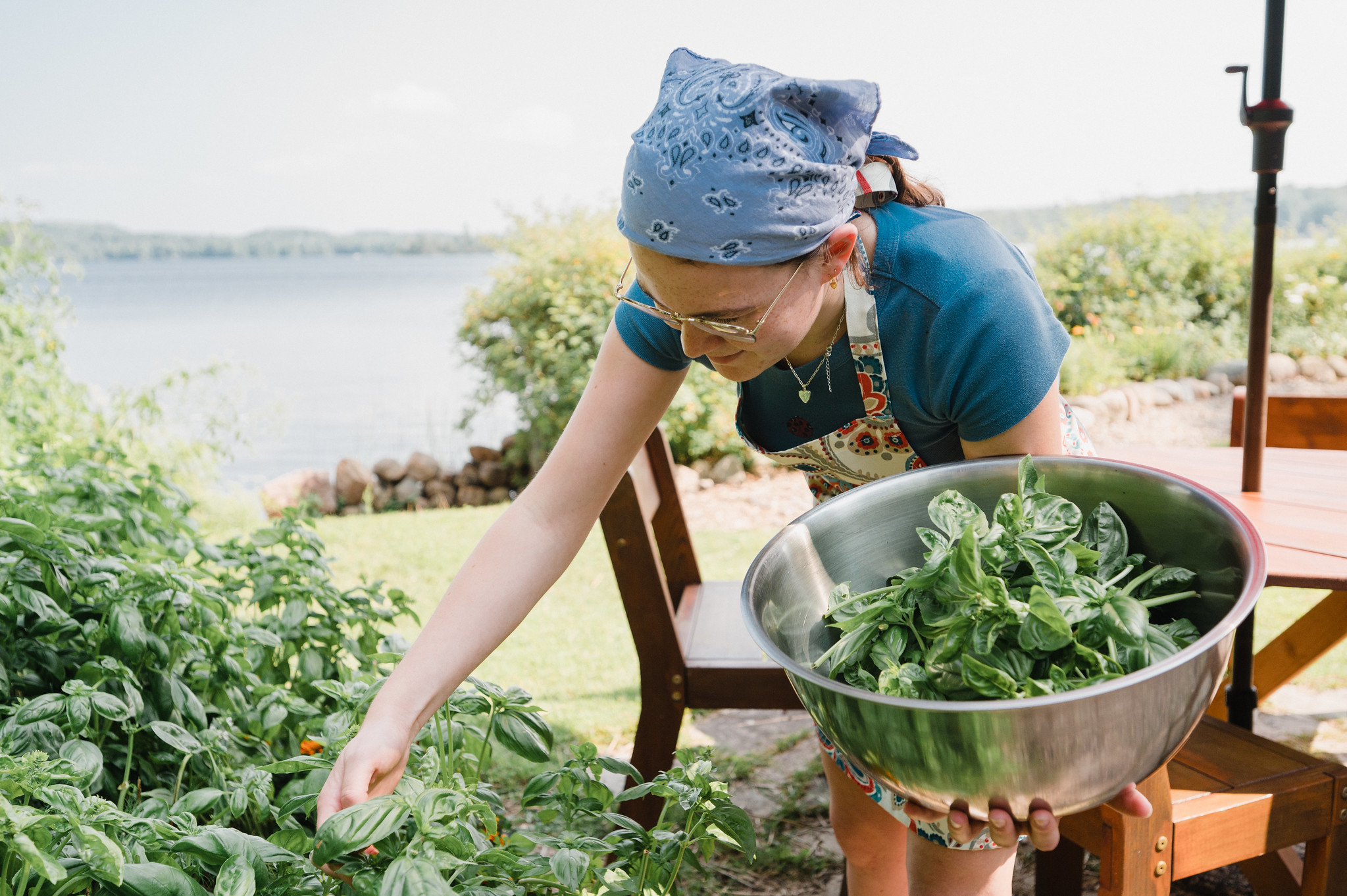
Food is central to the guest experience at Northern Edge, and how we source food is an expression of community and regional resilience. We prioritize Local, Ontario-based, and Canadian suppliers, grow fresh herbs on site, and integrate food procurement with our broader commitments to land care, economic support for regional farms, and reducing our environmental footprint.
Our working definition of “local” is relational: we have direct relationships with most of our farmers and producers (generally located within ~100km) and we introduce them by name to our guests. Based on current purchasing:
- Approximately 35% of our food spend is local
- Approximately 70% of our food spend is Ontario-based (including local)
- The remaining 30% is sourced through Ontario-based distributors such as Ontario Natural Food Co-op and North Ontario Food Sales or direct with suppliers.
- Of this portion, approximately 5% is verified through supplier certifications as certified organic or ethically sourced.
We also:
- Grow fresh herbs on site for guest meals
- Grow a small amount of vegetables on site, which are occasionally used for guest meals when quantities allow
- Produce maple syrup on site. In some years we’ve produced up to 50 litres of maple syrup each year right here on our property to serve to guests and sell in our gift shop
- Invest in our local producer partners (For example supporting the development of a new hydroponic greenhouse at Springhill Farms.)
Guest Experience & Design
Many of the choices that most impact our sustainability happen through intentional engagement or limits to the guest experience:
- One program at a time: retreats are scheduled with shared arrival and departure days, giving the land, facilities, and team time to rest while reducing energy use between programs.
- Intentional capacity limits: Typical retreat size is 12–17 participants, with an absolute maximum overnight capacity of 32 guests.
- Unplugged by design: No Wi-Fi, televisions, or personal charging stations are provided, significantly reducing energy demand while supporting rest, presence, and connection to place.
- Low-impact recreation only: All guest activities are self-propelled (walking, paddling, cross-country skiing, cycling); no motorized recreation is offered on land or water (no jet skis, motor boats, ATVs, or ski doos).
- Dark-sky conscious lighting: Exterior lighting is limited and motion-controlled, preserving dark skies and reducing nighttime energy use and wildlife disruption.
- Substance, fragrance, and smoking-free environment: Our policies restrict smoking, alcohol, and substance-use (and we ask guests to be conscious of perfumes/scents) to foster safety, accessibility, and respect for the land, team, and fellow guests while creating deeper, more intimate experiences.
- No single-use guest amenities: Bottled water, disposable toiletries, and single-use food packaging are intentionally avoided in favour of refillable and reusable systems.
- No air conditioning or electric heating: High-draw mechanical heating and cooling systems are intentionally avoided to reduce energy demand.
- No animal-based recreation: Hunting, fishing, and dog-sledding are not permitted, minimizing wildlife disruption. Guests witness the natural rhythms of wildlife in their habitat, without interactions.
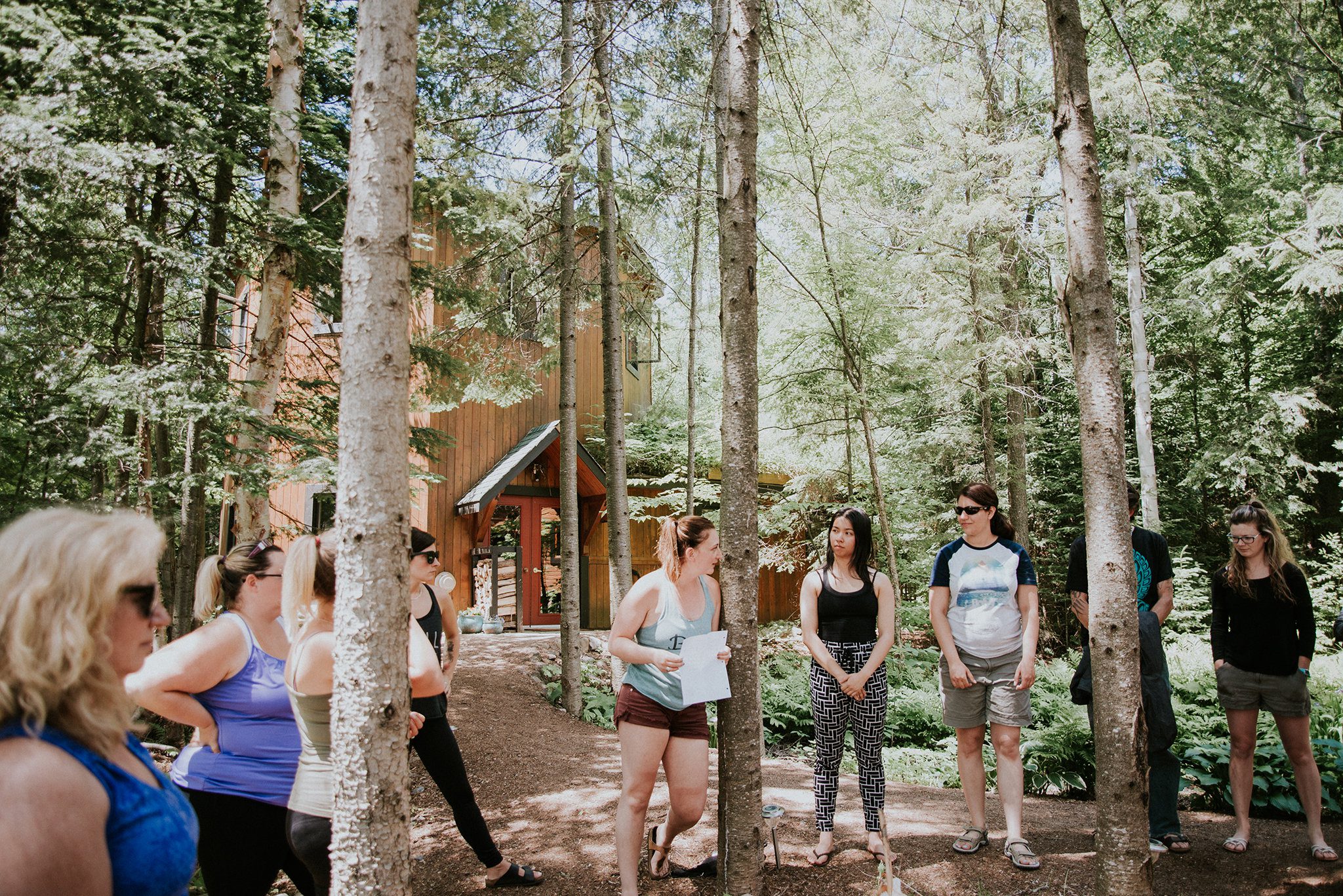
Local facilitators and staff walk gently on the earth and actively invite our guests to do the same — whether practicing “leave-no-trace” adventures in nature, pitching in with communal clean-up after dinnertime (recalling a time when the best conversations happened at the kitchen sink), or learning how to watch their energy use, our guests return home inspired and ready to make a difference.
Community & Social Mission
Sustainability at Northern Edge includes people, access, and long-term community wellbeing. It shows up in how we structure our organization, how we price and operate our programs, who we partner with, and how we care for the land and one another over time.
As a family-run social enterprise, our approach is shaped by long-term thinking, relationship-based work, and a commitment to contributing positively to our local community and the broader tourism sector. At the heart of this work is our purpose: “to provide experiences in nature that help us rediscover ourselves, empower one another, and heal our connection to the earth.”
- Mission before profit: Northern Edge is a social enterprise, which means our business exists to make the world a better place through our program offerings and beyond. We measure our success by care, continuity, and impact (not profit) and our pricing reflects the true cost of ethical operations, fair labour, and long-term care for the land.
- Equity, inclusion & aware programming: Northern Edge maintains clear policies welcoming diverse communities and has repeatedly hosted and co-created retreat programs with organizations including Black CAP, Indigenous Leadership (DSBN), Horizons for Youth, Anishinabek Nation WESHKINIIJIG Youth Program, and the National Aboriginal Council of Midwives. We are committed to culturally-responsive and trauma-sensitive facilitation, relationship-based program design, and ongoing learning. We continue to welcome partnerships with marginalized and underrepresented groups.
- Access: We offer need-based scholarship programs (including a diversity scholarship) to reduce financial barriers and support access to retreats for individuals who might not otherwise be able to attend.
- Local economic impact: We prioritize local suppliers, tradespeople, farmers, artisans, and service providers wherever possible, keeping a significant portion of our operational spending within the region and supporting rural livelihoods.
- In-kind community support: In-kind support is prioritized where it aligns with our mission and capacity. This has included retreat stays, shop gift baskets, shared fundraising visibility, and small local partnerships in support of initiatives such as Explore South River, the Women’s Own Resource Centre, Yogis Without Borders (MSF), and the Jane Goodall Foundation.
- Team & collaborator development: We invest intentionally in the growth and capacity of our staff and leaders through regular leadership summits, facilitated coffee chats, and structured learning programs, including Evolve: The Art of Transformational Leadership. Ongoing education has included workshops on anti-Black racism, trans inclusivity, trauma-informed leadership, and hosting a KAIROS Blanket Exercise, strengthening our ability to hold inclusive, respectful, and accountable spaces.
- Sector leadership & education: Northern Edge actively supports capacity-building in sustainable and community-led tourism. We have hosted a Best Practices in Sustainable Tourism Mission in partnership with the Gros Morne Institute of Sustainable Tourism (where Todd also co-created and co-facilitated the Edge of the Wedge program), are an ally of the Transformational Travel Council, and have hosted multiple regional tourism organizations for our Ignite program focused on community-led tourism development.
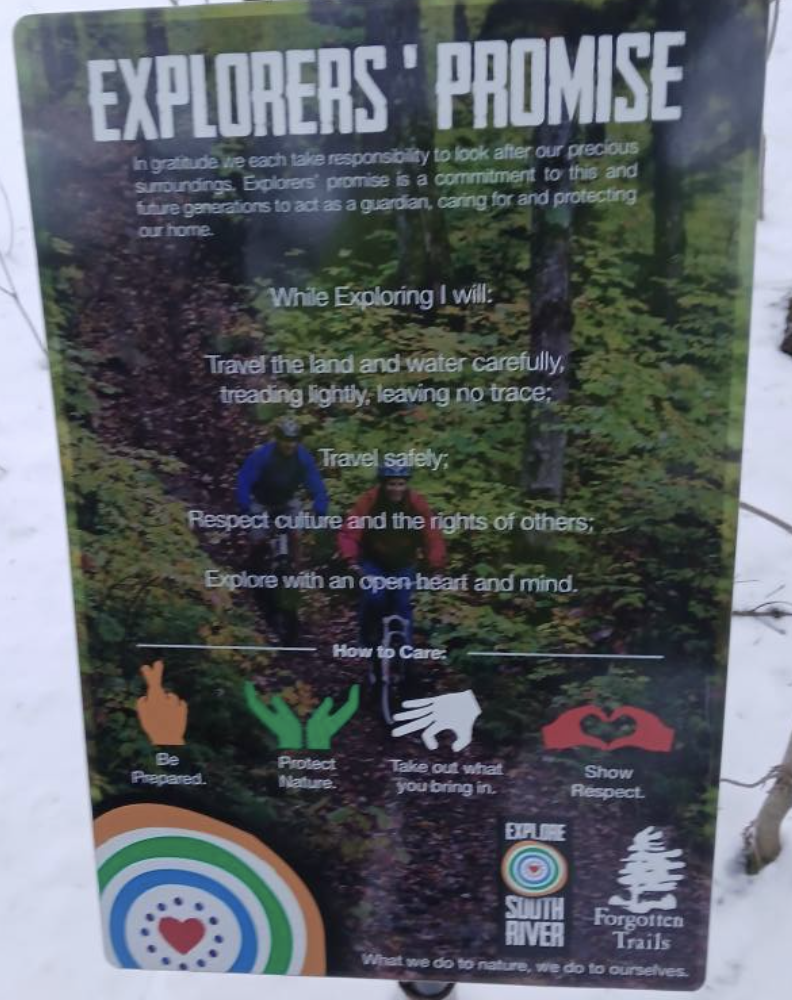
- Regional collaboration & tourism development: Northern Edge has contributed significantly to regional tourism initiatives, most notably Explore South River, a community-led project initiated by co-founder Todd. The initiative brought together local tourism businesses, artists, and non-profits to co-create shared infrastructure for values-aligned tourism, including a community resource map, a free app with local event and business listings, place-based storytelling signage, and the development of the Explorer’s Promise at local trails. Northern Edge supported this work through dedicated staff time, donated catering for community and fundraising events, direct financial support, and ongoing collaboration.
Looking Back, and Looking Ahead . . .
Over the decades, our practices have evolved as technology, safety standards, understanding, and our goals for our guests’ experience have changed.
Past initiatives have included guest participation in rotating solar panels, multiple cabins with composting toilets, guests bringing their own towels to reduce off-grid laundry service, a living roof, skylights, and vegetarian meal programs. Some of these systems have since been replaced by new alternatives, while our underlying values remain unchanged.
We’ve been recognized with an Industry Excellence Award for Sustainable Tourism (2010), FeastON certification (2014-2021) recognizing industry leaders for serving regional food, Canadian Tourism Awards National Finalist 2011/2012 & 2016, and as late as 2017, Northern Edge Algonquin was one of two Platinum Level GreenLeaders in Canada; recognizing attention to sustainability in solar powered operations and environmental practices including working with local farmers, trails and experience providers.
We see sustainability as a process of learning, adaptation, and care over time. As we move forward, we are committed to:
- Continuous Improvement: Our team meets twice yearly to consider the guest experience, sustainability, what’s working and how it can get better than this; and to take actionable steps forward
- Continuing to prioritize impact reduction over convenience and careful design of the guest experience, reviewing and refining our practices as we learn and evolve
- Checking back on our sustainability metrics every few years to ensure they remain aligned with our values and operational realities, and updating them here as we grow.
We invite our guests to share in this responsibility — with care, curiosity, and respect for the land we all depend on.