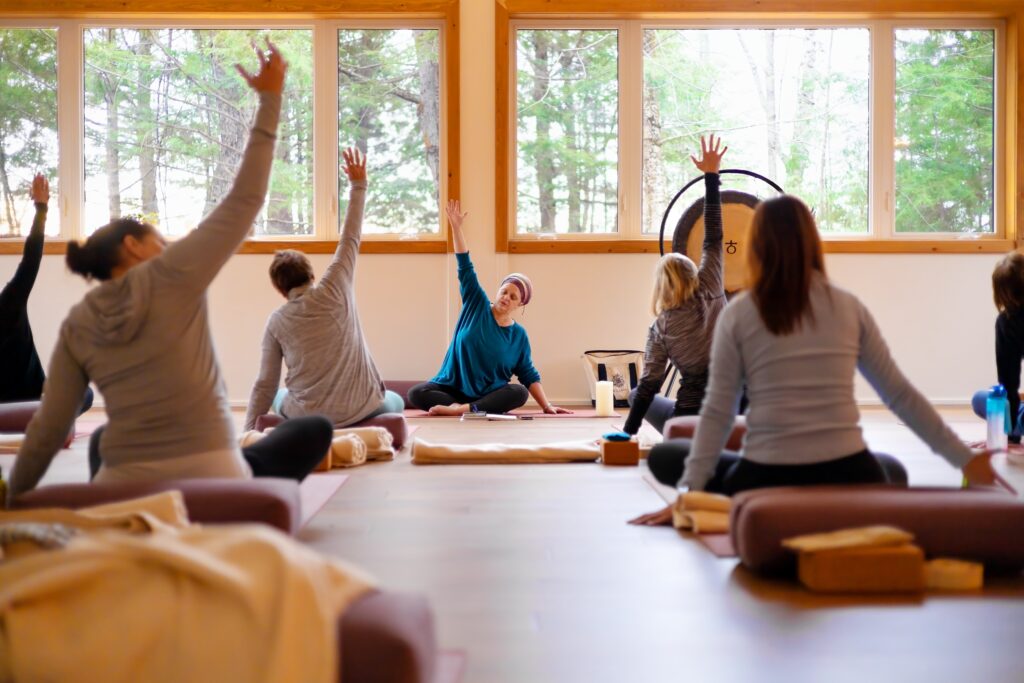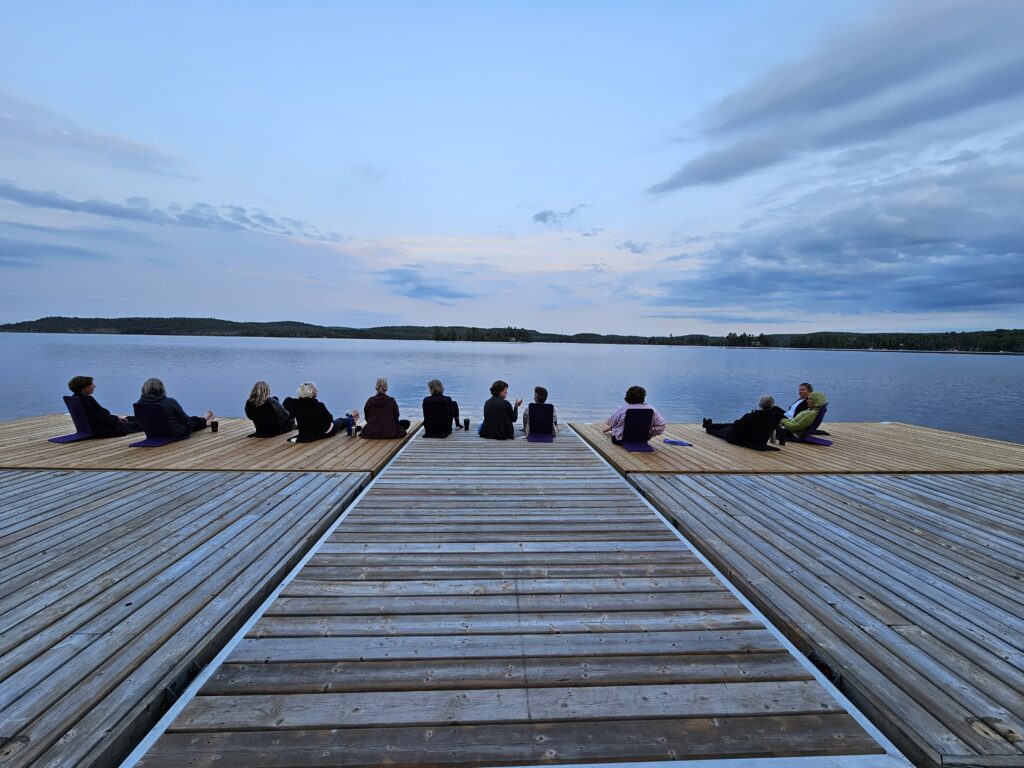
Retreat facilitators are not just teachers or event organizers. They are leaders who create space for people to step away from everyday life and engage in meaningful experiences together. Facilitators balance many roles at once: teacher, host, guide, listener, and community builder.
So how do people become retreat facilitators? There is no single defined pathway, but there are several qualities and experiences that most great retreat leaders share.
How to Become a great retreat facilitator?
Have you wondered about stepping into retreat leadership?
Great retreat facilitators are confident and heart-centered leaders who create the conditions where meaningful experiences can unfold. They have done their own inner homework, have a variety of gifts and passions to share, and have the interpersonal and leadership skills to hold a group experience. If you’re strongly considering this path, we’ve identified below the 3 cornerstones of retreat facilitation you will want to develop.
1: Personal Experience
Before guiding others, retreat facilitators need to be well along their own path of personal growth and development.
Facilitators are often called upon to hold emotional space, support people through vulnerable moments, or navigate conflict or tension within a group. This absolutely requires a level of self-awareness, emotional maturity, and personal reflection that can only be acquired through doing the personal work. As leaders we do not need to be perfect humans, free of struggle – but we need to have walked the path, navigated our own challenges with honesty and humility.
Many facilitators develop this foundation naturally through their training, or by participating in:
- transformational retreats
- leadership programs
- yoga teacher trainings
- psychotherapy
- long-term personal development work
If you want to lead retreats, the best place to start is by attending retreats yourself with a wide variety of facilitators. This gives you the opportunity to observe how programs are structured, what you appreciate as a participant, what you might do differently – and learn a thing or two about what creates meaningful experiences. All while undergoing your own personal development journey.
In our experience, the most successful retreat leaders are the ones who are completely committed to their own personal development. They continually re-invest into these experiences to keep growing. They fully walk the path, and have stepped into leadership to share their experience with others.
If you’re looking to build a strong foundation by connecting more deeply with yourself and with nature, our Heart Wisdom Retreats are designed to support deep personal exploration and leadership growth.
2: Passion & Practice
The best facilitators are ones that are truly passionate about the programming they offer to participants.
In our experience, it is important for facilitators to have a mix of interests and passions. One handful of offerings or “hard skills” they have specifically trained in or been certified to offer, and another handful of interests they’ve explored deeply enough to share authentically even if not certified.
For example, a facilitator might pair certifications and training in:
- yoga or movement instruction
- paddling instruction
- nature interpretation and guiding
- mindfulness, meditation, or breathwork
- coaching or personal development methodology
- psychotherapy
with passion for:
- creative expression through writing, music, or art
- personal wellness practices
- nature connection
- outdoor recreation
- storytelling
- traveling & exploring locally
Retreats go beyond the exploration of a single discipline or practice. They weave multiple elements together into a cohesive experience – often through partnership – but all in all leading a yoga retreat requires more programming from the facilitator than teaching yoga classes. In our experience, facilitators with training in a few of the earlier categories have a safe teaching mindset that is adaptable to leading groups through a variety of programming — what’s important is that they have a passion for the subject and have practiced it well.
Often the very best retreats are co-facilitated by a team of two or more, possibly with some special guests dropping in from time to time. This model allows a wider range of programming, and means facilitators don’t need to carry the full share of work.
Looking to pick up a new practice or develop a new passion? We have a range of retreats with introductory programs as well as some certification programs like Float, our Aerial YTT and SUP YTT Retreat.
3: Emotional Intelligence & Leadership
Equally important to what facilitators share with retreat attendees is how they share it. Leadership within a retreat context is as much about presence & awareness as it is about instruction. Sometimes referred to as “soft skills”, these are qualities that can come naturally to some, and can be intentionally cultivated through undergoing the personal work mentioned in our first cornerstone or further professional development in:
Natural Leadership
It is important for retreat leaders to comfortable guiding a group experience. To know when to step forward and offer direction, capturing and holding the group’s attention with ease – but it is equally (or perhaps even more) important for them to understand how and when to step back and create space for participants to shape their own experience, and let things unfold naturally.
Deep Listening & Empathy
Facilitators listen deeply to participant stories and sharing, and need to be able to respond when somebody needs more support. This might mean taking the time to offer a 1:1, providing acts of service, or making appropriate adaptations to programming. Sometimes it is not possible for a facilitator to provide the direct care that is needed without affecting the whole group – which is why it can be especially valuable to work with a team or partner.
Presence & Awareness
At the same time, facilitators are responsible for the group experience – they need to be present to the dynamics and energy levels happening within the group, keeping an awareness of where all the participants are at and where the program may need to be adjusted. Perhaps adding in some downtime, or bringing a program session outdoors to shake things up.
Some facilitators develop these skills through professional training programs. Others gain them gradually through years of teaching, coaching, or community leadership. Evolve: The Art of Transformational Facilitation is a retreat we created specifically to help teachers, coaches, and guides develop the leadership skills needed to hold transformational spaces and facilitate retreats.
Common Pathways to Becoming a Retreat Facilitator
While there is no single route, we often see two common pathways.
1. Participant → Assistant → Co-Facilitator
Some facilitators begin as retreat participants.
They attend retreats repeatedly, deepen their own personal development, and gradually take on leadership roles assisting with programs, mentoring participants, supporting the facilitator. Once they the tools available, they may be invited to co-facilitate retreats alongside experienced leaders.
2. Community Leader → Retreat Planner
Others begin with an existing community they have grown through:
- yoga teaching
- coaching
- wellness practices
- intentional community building
- creative leadership
- & other unique offerings
These leaders have the community in place, so once they are ready to level up from classes, workshops, and day programs they begin to plan and market their own retreats.
One route that shares a lot of the workload is to partner with retreat centres that provide the venue, meals, and accommodation. This allows the leader to focus on selling and leading the retreat.
If you feel like a strong leader but don’t yet have a strong community base, consider:
- partnering with another facilitator
- joining retreats as a special guest to lead a small element
- starting with workshops or small events
- applying to work at organizations like Wild Women Expeditions or G Adventures
Over time, these experiences help build the foundation for leading retreats.
How to know if Retreat Facilitation is the right path for you?
Leading retreats is deeply rewarding, but it is not for everyone. You might be well-suited for this role if you:
- enjoy guiding group experiences and are a natural leader
- are comfortable holding space for emotional conversations
- are passionate about personal growth and transformation
- enjoy bringing people together in meaningful ways
- feel called to create experiences that help others grow
Most facilitators find that retreat leadership emerges naturally from their work as teachers, coaches, guides, or community leaders.
In this role, you’re responsible for curating an all-around multi-day experience and you hold a duty of care for participants. This comes with real responsibility, but importantly facilitators do not need to have all the answers. Participants may arrive carrying stress, anxiety, burnout, personal challenges, and more. Facilitators should be clear about the qualifications and limits, avoid making promises they cannot fulfill, and know when to refer participants to professional support if needed.
Important to remember: retreat leadership is not simply:
- teaching a yoga class once or twice a day (and disappearing outside of that)
- facilitators need to be with their participants through the majority of their time – either leading program elements or experiencing them alongside the group.
- facilitators should develop practices to protect their energy and get the rest they need while staying present with the group.
- focusing on marketing the retreat above all else
- designing and marketing a retreat do often go hand-in-hand
- being able to sell the retreat well is only a small piece of the puzzle
- being “on stage” at all times
- facilitators may act as connectors who introduce other guides and facilitators throughout the experience
- facilitators step back and hold space for the experience between participants unfold naturally
How Much Can Retreat Facilitators Earn?
For most leaders, retreat leadership is a piece of the puzzle in addition to other professional work, rather than a standalone income stream. For yoga teachers & studio owners, coaches, therapists, and more, retreats become a natural extension of their work – but because retreats take time to plan and promote, it’s rarely sustainable to jump directly into full-time retreat leadership as a primary income source:
Many retreat facilitators build a livelihood through a combination of different offerings, such as:
- hosting their own retreats
- collaborating as guest teachers on other retreats
- teaching workshops or classes
- offering coaching or consulting
- running online programs
Contract Facilitators
Some facilitators lead retreats on behalf of retreat centres, travel companies, or guiding organizations. They might be considered contractors, employees with salaries, or volunteers/special guests receiving honorariums or per-diem payments. In these cases compensation varies widely depending on the organization and the responsibilities involved – and often reflects the inclusion of meals, accommodation, and travel as a bonus for the facilitator. Some roles include guiding, teaching, or hosting, while others involve helping shape the overall retreat experience.
Retreat-Planner Facilitators
Facilitators who organize and lead their own retreats have more control over what they earn. They can determine their own fees (staying mindful of what their community can bear) and set the retreat price based on arrangement with the venue. Their earnings then depend on overall sales, preparation time, and expenses like marketing, travel, materials. While hosting your own retreat can be financially rewarding, it requires experience in planning, promotion, and community engagement.
Most facilitators do not start offering retreats primarily to make money: the ones that are most successful do so out of a genuine desire to serve participants and bring people together
Your Yoga & Wellness Retreat Planning Guide is Here!
Explore the ways we can grow and learn together, sharing advice and stories about developing facilitating, marketing, and building retreats and wellness communities.
A copy of our Yoga & Wellness Retreat Planning Guide is on its way to your inbox.