When organizations begin comparing corporate retreat venues, they often start with the visible details: bedrooms, meeting rooms, meals, activities and price.
One question can affect almost every part of the experience:
Will your team have the property to itself?
At a hotel, resort or conference centre, your meeting room may be private while the rest of the experience remains shared. Your team may pass wedding guests in the hallway, eat beside vacationers, compete for informal gathering spaces or encounter another company holding an event nearby.
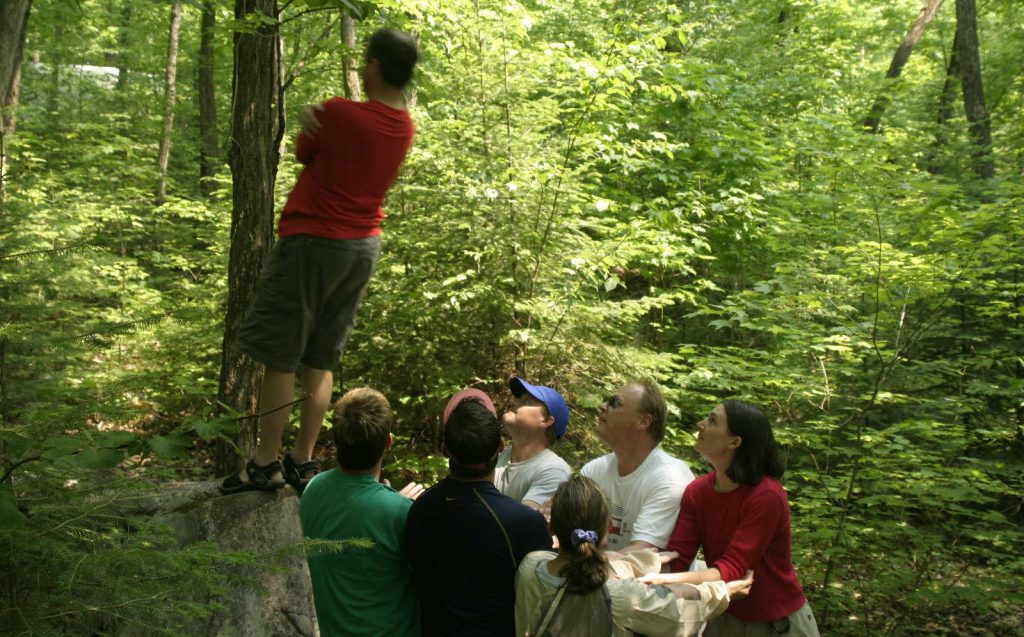
An exclusive-use corporate retreat venue works differently. Your group is the only retreat group on the property. The accommodations, gathering spaces, dining areas and grounds form one private environment for the experience you came to create.
That privacy is valuable. But privacy is only the beginning.
Exclusive use can improve focus, support more honest conversations, create greater flexibility and help a team stay connected through the unscheduled moments that often become the most memorable part of a retreat.
What does “exclusive use” mean for a corporate retreat?
Exclusive use generally means that a property—or an agreed portion of it—is reserved for one group rather than operating alongside unrelated guests and events.
The definition varies between venues. A private retreat might mean that your group has a private meeting room while sharing the accommodations, restaurant, grounds or recreational facilities. A full property buyout may provide sole access to most spaces but still leave some facilities open to the public.
Before booking, ask exactly what is included:
- Will another retreat, wedding or conference take place during our stay?
- Will our team share dining or recreation spaces with other guests?
- Which meeting rooms, breakout spaces and outdoor areas are reserved for us?
- Can our materials remain in place between sessions?
- Will unrelated guests or visitors pass through the property?
- Are the accommodations located together?
- How will venue staff use the space while our retreat is underway?
At Northern Edge Algonquin, we host one retreat group at a time. The intention is not merely to provide a closed meeting room. It is to give the group a shared world in which the whole retreat can unfold.

1. Privacy supports honest conversation
Corporate retreats often make room for conversations that do not fit comfortably into ordinary workdays.
A leadership team may need to discuss strategy, organizational change or challenging decisions. Colleagues may be working through conflict, rebuilding trust or reflecting honestly on how the team functions. Even celebratory retreats can invite personal stories and conversations that people would not choose to have in a public lobby.
Confidentiality depends partly on policy, but it also depends on the environment.
People speak differently when they are not watching strangers move past the room or wondering whether the group at the next table can hear. A private setting provides a greater sense of containment: the experience belongs to the group, and the group can give its full attention to one another.
This does not automatically create psychological safety. Thoughtful leadership and skilled facilitation still matter. But the right environment can support the conditions in which candour becomes possible.
2. Fewer distractions create deeper focus
The purpose of an off-site retreat is to step outside familiar patterns. A busy resort or city hotel can recreate many of the distractions the team was trying to leave behind.
People may disperse to shops, restaurants, bars or separate corners of the property. Notifications continue. Other events introduce noise and movement. Each transition requires the group to gather itself again.
An exclusive-use retreat centre protects continuity. A property free from wi-fi and cellular signals protects it even more.
A strategy session can flow into lunch without leaving the group’s shared environment. A question raised during a workshop can continue on a walk. The team can move from concentrated work to rest and back again without repeatedly switching contexts.
This is especially valuable for a multi-day retreat. Focus is not created only by what appears on the agenda. It is also created by removing the small interruptions that continually pull attention away.
3. The schedule can respond to the group
A corporate retreat rarely unfolds exactly as planned.
A conversation may need more time. An outdoor activity may need to move because of weather. The team may arrive tired and need a gentler opening—or make unexpected progress and be ready to take on a difficult topic sooner than anticipated.
Shared venues often organize the day around fixed room bookings, service windows and the needs of other guests. Exclusive-use venues can generally offer more room for the experience to breathe.
That does not mean abandoning a thoughtful agenda. It means the agenda can serve the group rather than the group serving the agenda.
Meals, facilitated sessions, outdoor experiences and downtime can be planned as parts of one coherent retreat. When the venue and facilitation teams work together, changes can be made with a clear understanding of the intended outcome.
4. Informal moments become part of the retreat
Some of the best conversations at a corporate retreat happen outside the formal sessions.
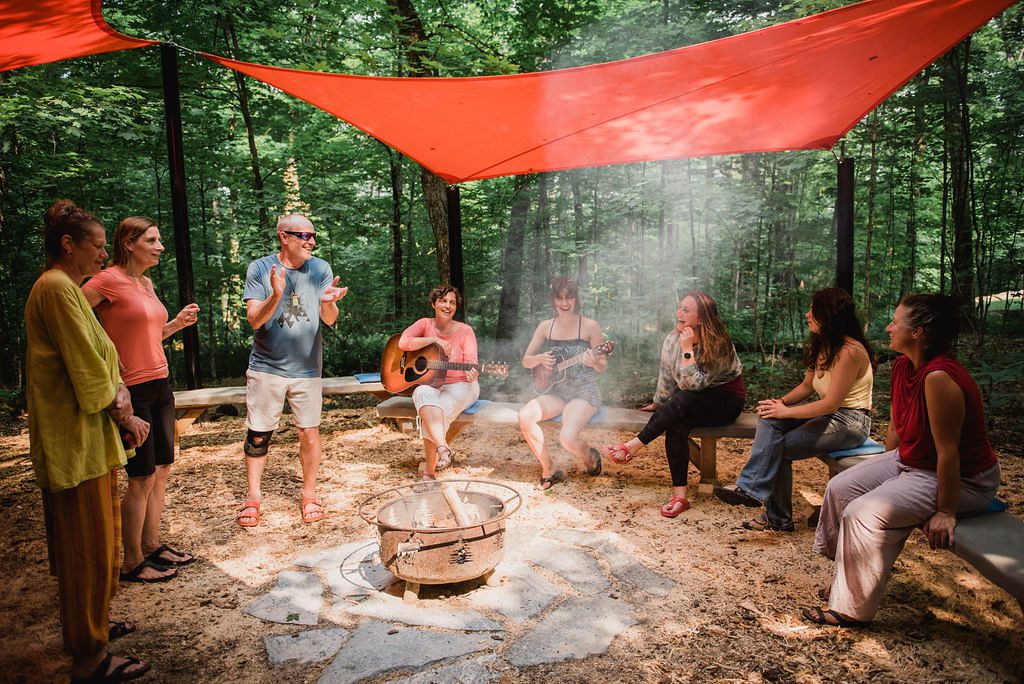
They happen over morning coffee, during a walk, beside the fire or while a few people help reset a room after a meal. Colleagues encounter one another without the usual roles, screens and meeting structures. A new employee speaks with a senior leader. Two departments discover a shared challenge. Someone returns to an earlier conversation with a more thoughtful answer.
These moments are harder to create when a group scatters after every scheduled activity.
At a private retreat venue, the spaces between sessions still belong to the group. People remain part of the same shared rhythm even when they are resting, moving outdoors or talking in smaller groups.
You cannot schedule chemistry. You can create better conditions for it.
5. The environment can reinforce the retreat’s purpose
Every venue communicates something.
A conventional conference room says that the group is here to conduct business much as it usually does. A sprawling resort may communicate reward and recreation, but it can also divide attention. A private retreat centre in nature signals that the organization is inviting people to slow down, participate differently and take the time seriously.
That distinction matters when the retreat is intended to:
- Strengthen connection across a remote or hybrid team
- Build resilience after a demanding period
- Work through change or uncertainty
- Develop leadership capacity
- Create strategic clarity
- Repair trust or improve collaboration
- Celebrate an accomplishment without relying on a conventional party
- Give employees meaningful time to rest and reconnect
The venue should not dictate the purpose, but it should support it.
6. A private setting can be more inclusive
Traditional corporate gatherings often default to loud restaurants, crowded hotels or alcohol-centred social events. Those environments do not work equally well for everyone.
A private retreat allows connection to be designed more intentionally.
Shared meals, nature, facilitated conversation, creativity, movement and unstructured time give people multiple ways to participate. Quieter colleagues do not have to compete with a crowded public environment. Employees who do not drink are not positioned outside the centre of the social experience. Team members can step away for rest without leaving the retreat altogether.
Accommodation privacy matters, too. Ask how many single and shared rooms are available, how room assignments will be handled and whether the proposed arrangement fits the needs and culture of your team.
Exclusive use does not make an event inclusive by itself. It gives planners greater control over the conditions they create.
7. Logistics become one connected experience
Corporate retreat planning can become a collection of separate arrangements: meeting rooms, accommodation, catering, facilitation, activities and transportation between them.
At an all-inclusive, exclusive-use venue, those pieces can be planned together.
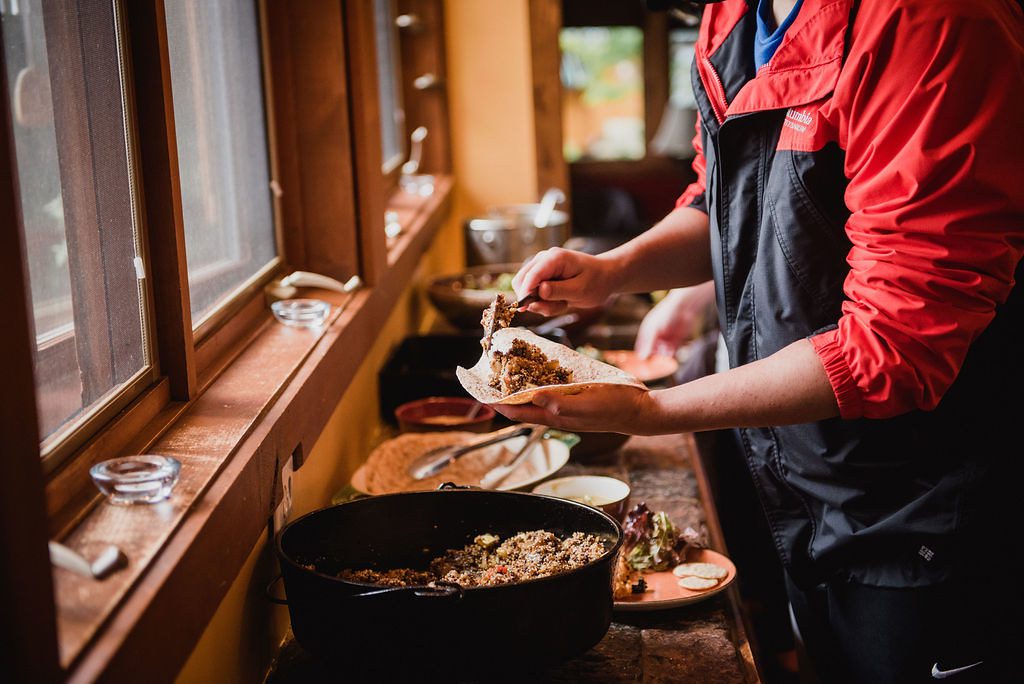
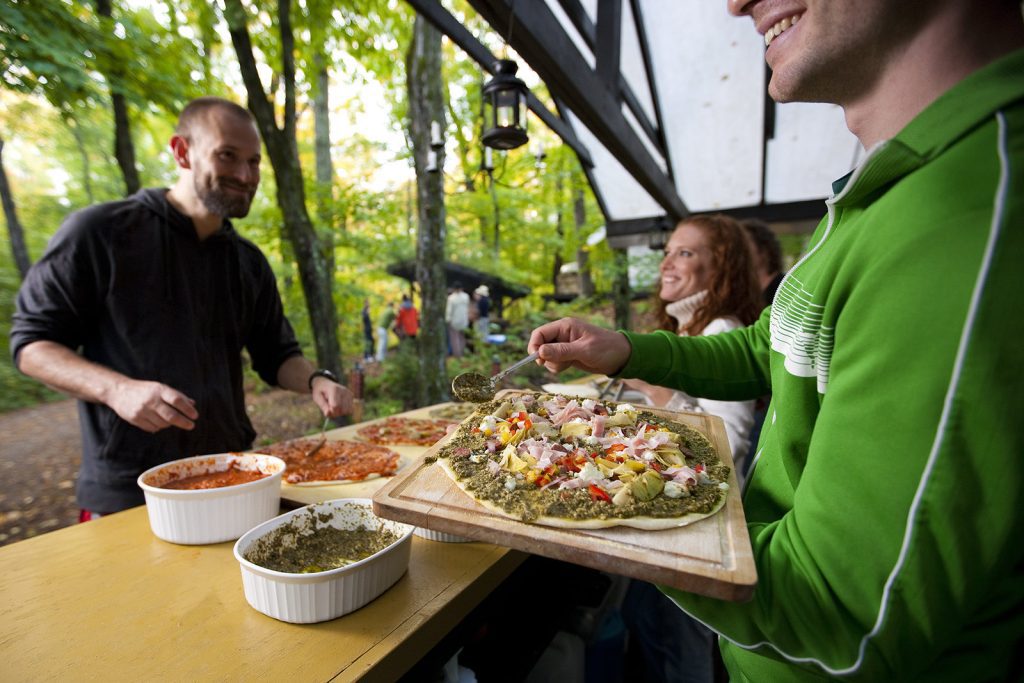
The meal schedule can support the program. Facilitators can understand the available spaces and natural setting. Activities can respond to the group’s energy and objectives. The person organizing the retreat can participate instead of spending the experience coordinating several vendors.
When comparing proposals, look beyond the room rate. Ask what is included in the complete experience and what your team will still need to organize.
Is exclusive use right for every corporate retreat?
Not necessarily.
A city hotel may be the better choice for a short meeting involving extensive audiovisual requirements or participants flying in for one day. A large resort may suit an incentive trip where guests want many independent entertainment options. Very large conferences need infrastructure that a smaller retreat centre cannot provide.
Exclusive use is particularly valuable when:
- Privacy or confidentiality matters
- The group needs sustained focus
- Relationship-building is a central objective
- The retreat includes sensitive or facilitated conversations
- The team wants a shared experience rather than separate leisure time
- The agenda should remain responsive
- Nature, wellness or restoration are part of the purpose
- The organization wants a distinctive alternative to a hotel conference
The right choice depends on what you want the retreat to accomplish.
Questions to ask an exclusive-use corporate retreat venue
Before requesting a proposal, confirm:
1. What does exclusive use include?
Ask about accommodations, dining rooms, meeting spaces, grounds and recreational facilities.
2. Will any other guests, groups or public visitors be present?
Do not assume that “private event” means private property.
3. How many private and shared rooms are available?
Compare the actual room configuration with your team’s expectations.
4. What spaces support formal sessions, breakouts and informal conversation?
A retreat needs more than one room with enough chairs.
5. How are meals, facilitation and activities coordinated?
Look for an integrated planning process rather than disconnected services.
6. What happens if weather changes the plan?
Ask about indoor alternatives and how the schedule can adapt.
7. What connectivity is available?
Clarify Wi-Fi, mobile service and options for essential organizational needs.
8. What support is available before and during the retreat?
Identify who will help shape the experience and who will be present on site.
9. What is included in the quoted price?
Ask about taxes, service fees, equipment, activities, meeting spaces and minimum charges.
10. Has the venue hosted retreats with similar goals?
Relevant experience matters as much as attractive photographs.
A corporate retreat is more than a meeting somewhere else
The best corporate retreats give people enough separation from ordinary work to think, relate and participate differently.
Exclusive use helps protect that separation.
It allows the team to inhabit one place together, sustain attention across the full experience and continue connecting after the formal session ends. It gives planners more control while giving participants more freedom to settle into the retreat.
You are not simply reserving bedrooms and a meeting room. You are choosing the conditions in which the work, rest and relationships of the retreat will happen.
Plan a private corporate retreat at Northern Edge Algonquin
Northern Edge Algonquin is an off-grid retreat centre near Algonquin Park in Ontario. We host one retreat group at a time and design all-inclusive corporate retreats around the needs of each team.
Retreats can include private use of the property, forest accommodations, nourishing meals, planning support, facilitated team and wellness programming, and seasonal nature-based experiences.